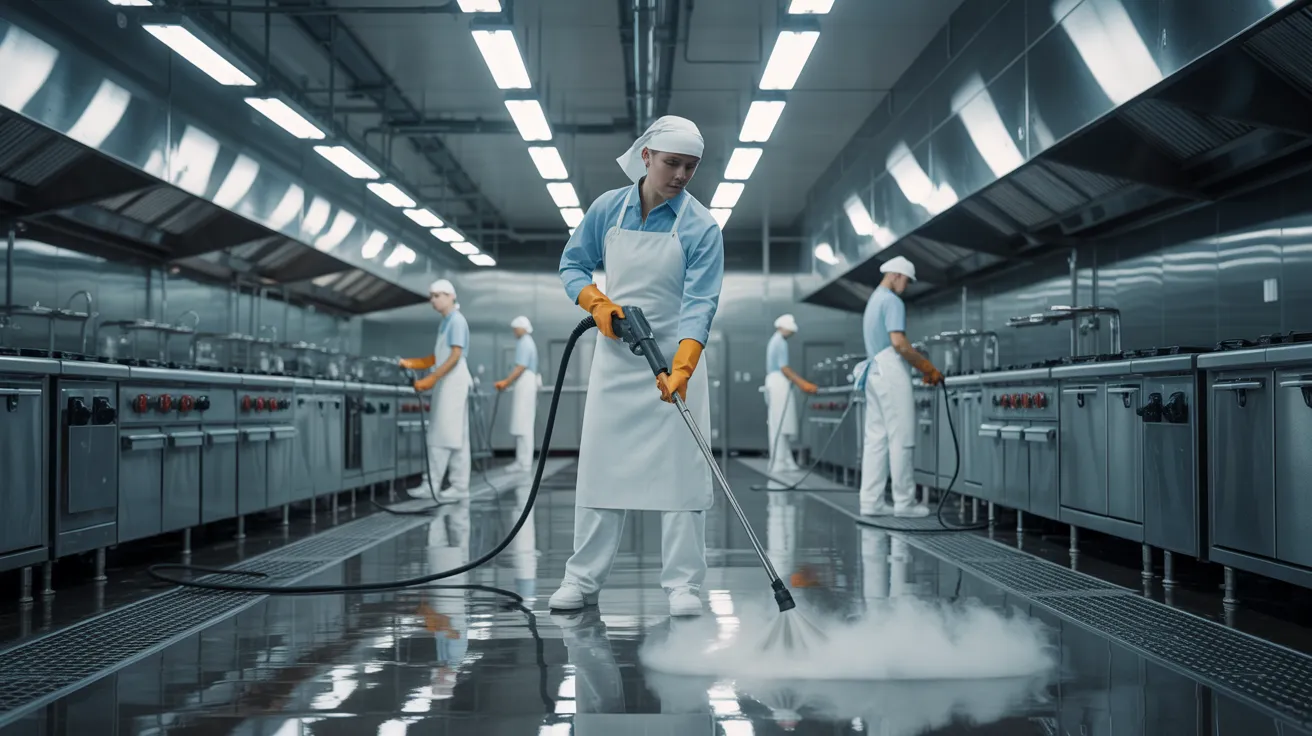
Commercial hygiene experts located in Brampton ensure food service establishments, food distribution facilities, bakeries, warehouses, and mobile food units in compliance. They treat high-touch surfaces, food-contact areas, equipment, floors, drains, restrooms, and preparation zones with certified chemicals, in correct dilution, and with verified times.
Important Highlights
- Sanitation professionals in Brampton serve restaurants, grocery departments, commissaries, warehouses, bakeries, schools, mobile vendors, and allergen-sensitive operations.
- Cross-contamination avoidance is accomplished by disinfecting frequently contacted areas, food-contact equipment, kitchens, floors, drains, restrooms, and storage areas with zone-based workflows.
- Qualified specialists check proper chemical concentration, appropriateness, and contact time, then file finishing with tests, audits, and remedial documentation.
- Proper maintenance plans factor in threat, output capacity, changeovers, incidents, and guidelines when allocating regular, weekly, and cyclical operations by area.
- Providers ought to possess HACCP, health regulatory expertise, safety training education, liability, testimonials, coded equipment, and inspection-ready sanitation files.
Brampton Establishments That Need Food Safety Cleaning: Which Ones?
Any Brampton facility that manages, stores, prepares, packages, or serves food needs sanitation protocols. You must apply it if your operation falls under health inspection, premises standards, or HACCP protocols. That requirement covers dining establishments, break rooms, food warehouses, market sections, butcheries, seafood areas, retail shops, and facility kitchens.
Documented food safety measures proves necessary in distribution centers, manufacturing facilities, cold storage areas, bakery retailers, educational meal programs, banquet venues, and meal delivery services. Seasonal and mobile businesses are included, like mobile kitchens, market vendors, and seasonal booths. Your venue needs established hygiene documentation should your staff work with ingredients, section ready-to-serve foods, heat finished items, or maintain allergen storage. In Brampton, hygiene stays voluntary; it forms part of statutory, functional, and public health adherence.
What Do Brampton Cleaning Professionals Handle?
You need professional cleaners who sanitize high-touch surfaces, kitchen areas, floors, and restrooms to comply with food safety and health regulations. They focus on these spaces because they pose the greatest danger for cross-contamination, slip hazards, and hygiene violations.
Understanding their cleaning procedures enables you to validate your facility's cleaning meets required standards and regulations.
Focusing on High-Touch Surface Cleaning
Brampton cleaning services underscore high-touch surface cleaning given the threat of bacteria, viruses, and food residue transferring across your facility. You require a documented schedule for cleaning door handles, push plates, switches, railings, shared equipment controls, POS terminals, and refrigerator pulls. Implementing contact point analysis, experts identify every frequently handled zone and set cleaning schedule
maintaining directional patterns, and keeping separate sanitization equipment by location
Food Prep Areas, Flooring, and Sanitary Facilities
Professional cleaners in Brampton prioritize kitchens, floors, and restrooms given that each location involves distinct food safety, falling hazards, and health code requirements. In industrial kitchens, you need degreasing on cook lines, equipment exteriors, drains, prep surfaces, and splash zones to reduce bacterial growth and pest activity.
You should also expect documented floor care. is likewise provided as part of the service.
In restrooms, cleaners disinfect contact surfaces, bathroom hardware, partition walls, accessory dispensers, and receptacles then refill supplies and eliminate odor. They also service restaurant moprooms, where chemical storage, sink hygiene, and drainage conditions can affect sanitation compliance and staff safety daily.
Why Food Safety Cleaning Matters in Brampton
Brampton operations demand proper hygiene standards to fulfill health code requirements and pass audits. You also minimize cross-contamination by cleaning and sanitizing food-contact surfaces, equipment, and high-touch areas correctly. Most importantly, you safeguard community wellness by reducing the chance of food poisoning in your establishment.
Sanitary Standards Adherence
Brampton food establishments must comply with mandatory safety protocols, so sanitation practices is essential to fulfilling health codes, protecting customers, and sidestepping penalties. You must maintain clean food preparation areas, recorded sanitation plans, safe chemical management, and traceable training practices that comply with municipal and provincial inspection expectations.
Proper sanitation supports allergen reduction by limiting particles on shared equipment and regularly touched locations.
Cross-Contamination Prevention
Meeting health code standards also depends on your ability to prevent cross-contamination during daily food handling and cleaning. You must separate raw ingredients from ready-to-eat foods, clean work areas after each use, and store chemicals away from food-contact items. Clear procedures reduce transfer risks and ensure ongoing adherence to health checks.
Building allergen isolation prevents key allergens from reaching shared surfaces, containers, or equipment. Utilize dedicated cutting boards, color-coded tools, and precise instrument labeling so team members won't blend products in cooking or serving.Enforce handwashing after handling uncooked meats, shellfish, egg items, or allergen substances. Swap wiping cloths regularly, and confirm sanitizer strength with test strips. When your team follows these practices each shift, you create a cleaner, safer operation that meets Brampton's food safety expectations consistently.
Community Health Safety
Should cleaning standards break, you don't simply encounter inspection problems—you increase the see now potential of contamination-related sickness impacting customers, staff, and the wider Brampton population. You also weaken your role in safeguarding community wellness, especially in high-traffic food premises where pathogens travel quickly through surfaces, equipment, and touchpoints.
You need cleaning protocols that remove soils, sanitize correctly, and confirm effectiveness. That requires adhering to exposure periods, employing authorized sanitizers, recording cleaning times, and training staff to meet health-unit expectations. These controls support disease prevention by reducing pathogens before they reach food or hands. In Brampton, strong sanitation protects vulnerable populations, prevents disease spread, and enables you to show due diligence. When you clean to standard, you exceed basic requirements—you actively reduce risk and promote secure food handling throughout the region.
Why Is Cleaning Essential for Food Safety Compliance?
Following thorough cleaning protocols backs food safety compliance by minimizing contamination hazards, limiting pathogen development, and maintaining your facility's adherence to sanitation requirements under HACCP-based programs and public health regulations. You validate that contact surfaces appear visibly clean and microbiologically controlled, backing documented preventive controls and inspection readiness.
Strategic cleaning practices also reinforce allergen mitigation by removing residues that can trigger undeclared allergen exposure.
What's the Ideal Time to Schedule Commercial Cleaning?
gather contaminants. Raise frequency
facility shutdowns, weather-driven soil accumulation, or pest activity periods.
How Do You Choose Brampton Cleaning Experts?
Screen providers initially by their food-safe sanitation requirements—not budget alone. You need to confirm that every company meets CFIA, public health, and HACCP standards for your operation. Demand proof of insurance, WHMIS compliance, training records, and management systems. Evaluate technician understanding of cross-contamination risks, chemical safety, and documented sanitation practices.
You must also evaluate business consistency and accountability. Seek references from Brampton food companies, then assess response speed, corrective-action procedures, and communication standards. Ensure the company enables supplier checks and can provide inspection-ready documentation when authorities or third parties demand verification. Verify equipment is maintained, colour-coded tools are deployed correctly, and operational-specific risks are understood. A reputable service protects compliance, product safety, and your brand reputation.
What's included in a sanitation cleaning strategy?
Establish a documented program that establishes every sanitation task, standard, and responsibility ahead of production commencement. You should list cleaning frequencies, approved chemicals, dilution rates, contact times, tools, and verification methods for each sector, surface, and equipment. Add pre-operational inspections, corrective actions, and employee training requirements.
Your plan should also cover cross-contamination prevention, waste disposal, pest management measures, and scheduled documentation for bathrooms, drainage, ground surfaces, and food-handling zones. Clarify how you'll distinguish raw from ready-to-eat operations, support ingredient tracking, and maintain accurate allergen labeling through validated cleaning between product changes. You should establish accountability, maintain signed records, and review results against regulatory standards, HACCP controls, and customer requirements. When gaps appear, revise procedures immediately and retrain staff.
Popular Inquired Inquiries
Do cleaning services operate during nighttime hours at Brampton properties?
Yes, you can book cleaning services to support nighttime operations in Brampton facilities. You'll coordinate nighttime cleaning around operational windows, access controls, and staffing requirements. Providers typically establish nightshift procedures to minimize interruption, maintain standards, and record finished work. You should verify response times, supervision, access protocols, and disposal methods before beginning service. If you operate controlled environments, you'll also need documentation that support inspections and internal quality assurance.
Are hazard containment solutions available from sanitation professionals?
Yes, you can expect Brampton cleaning experts who offer hazard containment solutions. They handle contamination, assess risks, contain contamination, and start rapid decontamination to reduce exposure and prevent business interruption. You should verify arrival timeframes, professional credentials, safety procedures, and waste management. If your facility must meet regulatory requirements, choose a provider that records events, follows compliant standards, and enables compliance verification.
Do environmentally safe disinfectants work safely on food preparation areas?
Definitely, eco-friendly disinfectants operate safely on food-contact surfaces if you purchase solutions certified for food use that comply with regulatory compliant. You must confirm contact duration, concentration levels, and rinse procedures in advance of use. Plant-derived products lower chemical hazards, but you must have evidence of effectiveness against target microorganisms. To keep surfaces residue-free, implement precise manufacturer instructions and verify your disinfectant meets food sanitation requirements.
Will maintenance plans adapt to seasonal shifts?
Certainly, cleaning plans adapt to seasonal shifts effectively. Modify frequencies, labor allocation, sanitizers, and testing procedures to match with production rhythms while preserving regulatory adherence. Minimize equipment downtime by timing cleaning amid equipment transitions, peak seasons, and operational patterns. Further update SSOPs, instruction programs, and facility monitoring to capture transient threats, emerging allergens, or increased soil loads. Ongoing evaluations preserve your strategy efficient.
Are professional cleaning companies offering employee instruction on sanitation best practices?
Absolutely, commercial cleaners regularly deliver employee education on hygiene standards. Your staff receives training on correct chemical handling, dwell times, cross-contamination prevention, equipment disassembly, and documentation. They typically align instruction with HACCP, GMP, and CFIA or regional health authority requirements. Many conduct health inspections to verify compliance, identify gaps, and reinforce corrective actions. This enables you to sustain consistent procedures, pass inspections, and reduce food safety risks consistently.
Final Thoughts
Partnering with Brampton food safety and commercial cleaning professionals goes beyond tidying—it ensures your facility stays inspection-compliant and your protocols remain compliant. From processing facilities to kitchens, each sanitized surface and maintained corner lessens contamination risk and prevents major expenses. By arranging service on appropriate schedules and implementing a thorough cleaning program, you protect your workforce, clients, and your image. In a heavily regulated sector, clean environments can't be overlooked—they're vital to proper management.